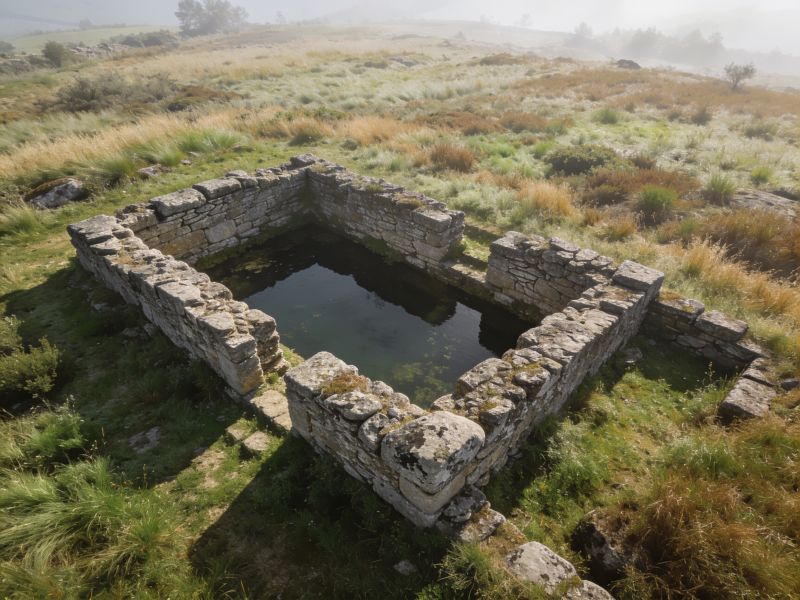
Acunia is not a name that rolls off the tongue in most archaeological circles, and that obscurity is precisely what makes it interesting. A minor Roman settlement in the hinterland of what is now northern Portugal。Acunia appears in just three surviving ancient sources—a fragmentary itinerary, a boundary stone, and a single inscription reused as building material in a medieval church. My own visit to the site last spring confirmed what the literature had hinted at: the visible remains are modest, a few wall foundations and a cistern, but the surrounding landscape tells a more complicated story. The settlement sat at a crossroads where a road from Bracara Augusta met a local track heading toward the Douro valley. That geography alone suggests Acunia was never a backwater, despite its near-total absence from mainstream Roman histories.Most published treatments of Acunia treat it as a closed case—a small waystation, briefly occupied and quietly abandoned. I find that conclusion premature. The pottery assemblage from the 1980s excavations。stored in boxes at the municipal museum in Vila Real, includes significant quantities of late terra sigillata from Gaul and a handful of amphora sherds that point to olive oil imports from Baetica. That is not the profile of a subsistence hamlet. Someone at Acunia had cash and connections. The site's decline, whenever it came, was probably not a slow fade but a sudden rupture—perhaps a fire, perhaps the rerouting of the road after a landslide upstream. The evidence is ambiguous, and ambiguity is where the real research questions live.What strikes me most about Acunia is how the site has been used by modern communities. Local farmers still call the field "a cidade"—the city—a name that outlasted the Romans by fifteen centuries. When I asked one elderly resident why the ruins mattered, he shrugged and said, "They were here before us." That kind of vernacular memory rarely appears in site reports, yet it shapes how Acunia is protected, or not. A proposed logging road in 2019 would have cut through the eastern edge of the archaeological zone;it was halted only after a small group of amateur historians。none with formal training, documented the threatened area with drone photography. Their report was messy, unscientific, and utterly persuasive. Acunia survives partly because of that stubbornness.Academic neglect of Acunia has real consequences. Without a comprehensive publication of the 1980s material, every new interpretation rests on the same thin foundation. I spent an afternoon with the site notebook of the original excavator—a retired schoolteacher named Ilídio—and found pages of careful stratigraphic drawings alongside complaints about broken equipment and a leaking tent. He recorded a coin of Constantine near the cistern。
a detail that never made it into the brief interim report. That coin matters. It pushes the occupation of Acunia well into the fourth century, contradicting the tidy third-century abandonment narrative that still circulates in regional surveys. One coin is not a revolution, but it is a thread worth pulling.The future of Acunia depends less on grand discoveries than on small, consistent work: publishing the backlog, resurveying the road network with lidar。and taking local memory seriously as a form of evidence. I am skeptical of calls to turn the site into a "visitor experience" with reconstructed walls and interpretive panels. Acunia's value lies in its raggedness, in the way it resists easy narrative. A place that barely made it into the written record should not be smoothed into a tidy story for tourists. It should remain a little difficult, a little unresolved—a crossroads where the past is still arguing with itself.